Quick Summary

  • Compare 20 free AI tools for writing, SEO, social media, email, and support.
  • See free-tier limits, paid pricing, key features, benefits, and drawbacks.
  • Find the best AI tools for specific marketing workflow bottlenecks.
  • Learn the usage and feature limits of free AI tools for marketing.
  • Shortlist a stack like ChatGPT, Brevo, Canva, Buffer, AIOSEO, and Tidio.

A small marketing team is now expected to publish blogs, execute email flows, post daily across platforms, and answer customer questions within minutes. In-house hiring for all of that is unrealistic, while full-service agencies are often too expensive.

This guide covers 20 free AI tools for marketing across writing, search, social, email, and customer conversations. Each entry lists what the tool does, its key features, benefits, and drawbacks. Prices and ratings were verified against current vendor pricing and G2.

What are AI Tools for Marketing & What’s Their Purpose?

Two questions decide whether a free tool is worth it for you:

What kind of tool/platform is it, and what are the limitations of its free tier?

The former question splits the tools into two groups:

  • AI-native tools, where the model is the product, and you prompt it directly. ChatGPT and Perplexity work this way.
  • Platform tools with AI added as a layer. HubSpot and Mailchimp read your own contact records, so their drafts need less context from you.

On the latter question, “free” means three different things across this list:

  • Freemium: Runs forever with usage caps. For example, Brevo and Buffer.
  • Free trial: Full or limited access for a set period, after which you need to pay. Examples: Sprout Social and Zendesk.
  • Free tool inside a paid product: A standalone tool is available at no cost, even if you don’t buy the company’s main product. Example: AIOSEO’s Headline Analyzer.

Every free plan comes with a paywall: a send limit, a locked feature, vendor branding, or a per-seat charge when your team grows. Here’s a quick comparison of free AI tools for digital marketing teams managing multiple channels.

The table shows what each free plan allows, what the first paid tier costs, and how users rate the tool on G2.

Plugin Name Key Features Pricing Ratings
Copy.ai
Short-form ad and email copy
No Free Plan
4.7
Rytr
Cheap short-form writing
10k characters/mo
4.7
HubSpot
CRM-connected marketing AI
Free CRM, forms, email
4.4
ChatGPT
General writing and analysis
Unlimited text chats
4.6
AIOSEO
On-page SEO in WordPress
Free plugin scoring
4.8
Semrush One
Keyword and AI visibility data
10 keyword results/report
4.4
AnswerThePublic
Question research
3 searches/day
4.5
Perplexity AI
Cited research
5 searches/day
4.4
Canva Magic Studio
Design, copy, and video
50 credits/mo
4.7
Buffer
Social media scheduling with AI captions
3 channels
4.3
Predis.ai
Auto-generated posts
Watermarked allowance
4.7
Sprout Social
Enterprise social management
30-day trial
4.4
Brevo
Email automation at scale
Free 300 emails/day
4.5
MailerLite
Simple newsletters and pages
Free 250 subscribers
4.6
Omnisend
eCommerce email and SMS
Free 500 emails
4.6
Mailchimp
Email with wide integrations
Free 250 contacts
4.4
ManyChat
Instagram and Messenger bots
Free 25 contacts
4.5
Tidio
AI chat agent for support
Free 50 chats
4.6
Collect.chat
Conversational lead capture
Capped responses
4.6
Zendesk
Enterprise AI ticket resolution
14-day trial
4.3

The best AI tools for marketing are those whose free tiers match your workflow, and writing is where most teams start.

AI Marketing Tools for Content Writing and Copywriting

These four cover the most time-consuming writing tasks, making them the most crucial free AI tools for marketing teams.

1. Copy.ai

copyai - ai marketing tools

Copy.ai started as a short-form copywriting tool and now runs go-to-market workflows for sales and marketing teams. The chat interface still handles everyday copy well, but the product is priced for teams that automate rather than for solo writers.

Key Features

  • 90+ templates for ads, emails, and captions.
  • Brand Voice trained on copy you already published.
  • Workflow builder connecting research, writing, and formatting.
  • Access to OpenAI, Anthropic, and Gemini models.
Benefits
  • Short-form content output needs less rewriting than most template generators.
  • One subscription covers five seats instead of billing per user.
Drawbacks
  • The long-advertised free plan is no longer sold to new accounts.
  • The next tier above Chat jumps to four figures a month, with nothing in between.

Pricing: No free plan; Chat from $29/mo

Rating: 4.7/5 (G2)
2. Rytr

rytr

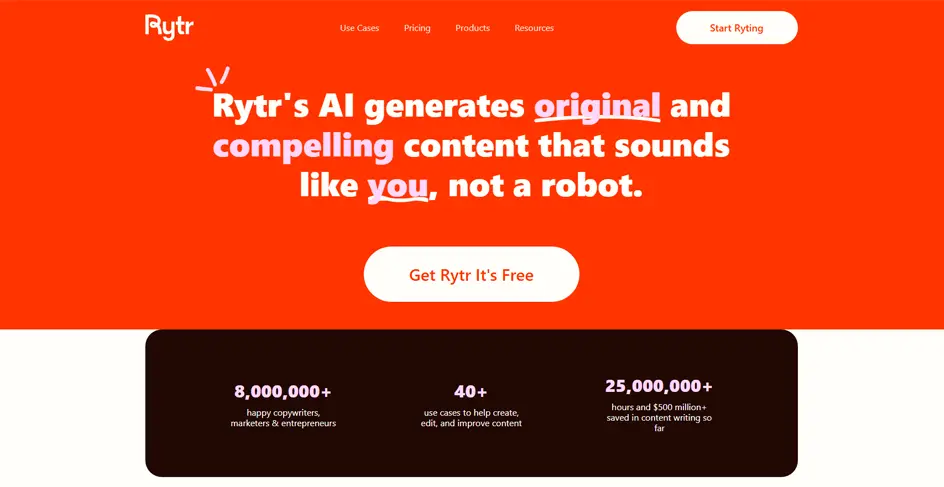
Rytr is a lightweight writing assistant built around 40+ use cases, from ad headlines to product descriptions. It is the cheapest serious option here, and the free allowance covers real short-copy work rather than a quick trial.

Key Features

  • 40+ templates for ads, emails, and product copy.
  • 20+ tone settings applied at generation.
  • Output in 30+ languages.
  • Plagiarism checker on paid tiers.
Benefits
  • Setup takes under five minutes with no onboarding.
  • Character limits are easier to forecast than credit systems.
Drawbacks
  • Quality drops past a few paragraphs, so long-form is a poor fit.
  • The free plan covers one language and no custom tone matching.

Pricing: Free; Unlimited from $9/mo

Rating: 4.7/5 (G2)

3. HubSpot

hubspot - ai marketing tools

HubSpot’s free tools cover CRM, forms, landing pages, and email. Its Breeze AI works with the same customer data, so emails can reflect past interactions instead of starting from scratch.

Key Features

  • Free CRM for contacts, companies, and deals.
  • Breeze Assistant for emails, outlines, and social copy.
  • Free form, popup, and landing page builders.
  • AI Search Grader for visibility inside AI answers.
Benefits
  • Drafts draw context from real CRM history, enabling personalization.
  • One free account replaces separate CRM, form, and email logins.
Drawbacks
  • Emails sent from free tools carry HubSpot branding.
  • The step-up to Professional is roughly $890 per month, plus onboarding fees.

Pricing: Free; Starter from $15/seat/mo

Rating: 4.4/5 (G2)
4. ChatGPT

chatgpt

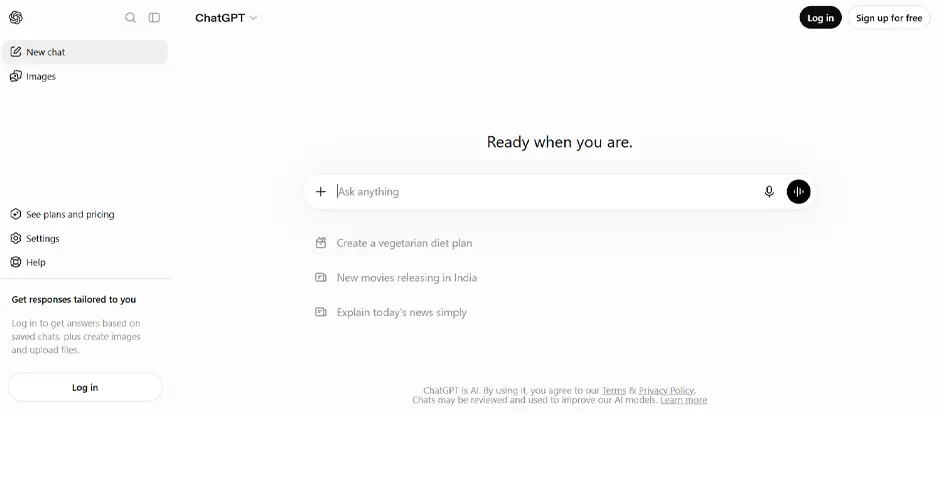
ChatGPT is the general-purpose model popular among most marketers. It handles briefs, rewrites, ad variants, and campaign post-mortems with no setup, and it’s the only tool in this category that uses your data to shape its output, not just generate text.

Key Features

  • Unlimited standard text chats on the free tier.
  • File uploads for spreadsheets, briefs, and reports.
  • Custom GPTs for repeatable tasks like tone checks.
  • Image generation and web search, capped daily.
Benefits
  • Handles analytical tasks like audience segmentation, not just routine writing.
  • Custom instructions carry brand rules into every new chat.
Drawbacks
  • Free US accounts now show ads and use a lighter model by default.
  • No native scheduling, publishing, or measurement.

Pricing: Free; Go $8/mo, Plus $20/mo

Rating: 4.6/5 (G2)

AI Marketing Tools for SEO and Content Research

Now let’s look at some free AI tools for marketing that enable your content to rank in classic search results and appear within AI-generated answers.
5. AIOSEO

AIOSEO

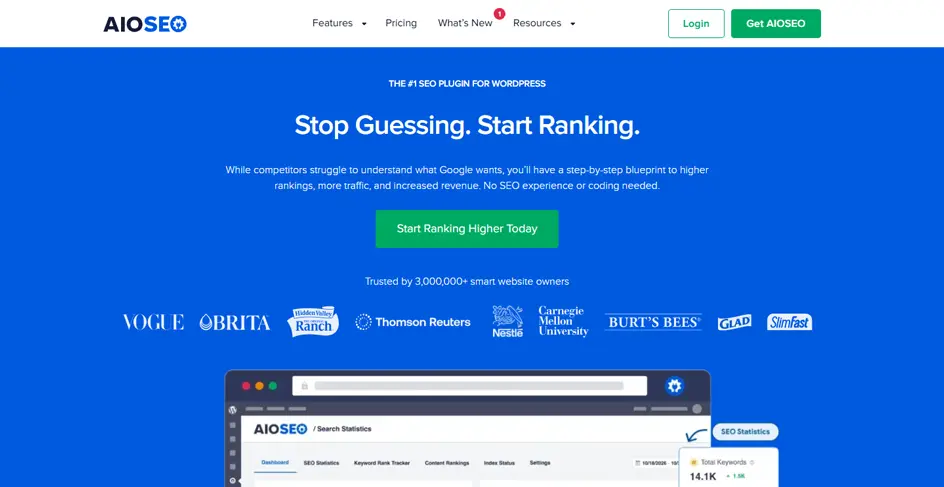
All in One SEO scores pages inside the WordPress editor as you write. It checks keyword placement, readability, links, and image alt text, then lists what to fix before the post goes live.

Key Features

  • TruSEO scoring against 70+ on-page factors.
  • Headline Analyzer with live scoring and word balance.
  • Smart XML sitemaps and automatic schema markup.
  • Search Console and Analytics inside the dashboard.
Benefits
  • The setup wizard produces a working configuration in ten minutes.
  • Feedback appears in the editor, so writers fix issues before publishing.
Drawbacks
  • Redirects and multiple focus keywords are locked behind Pro.
  • Renewal pricing roughly doubles after the first year.

Pricing: Free plugin; Pro from $49.50/yr

Rating: 4.8/5 (G2)

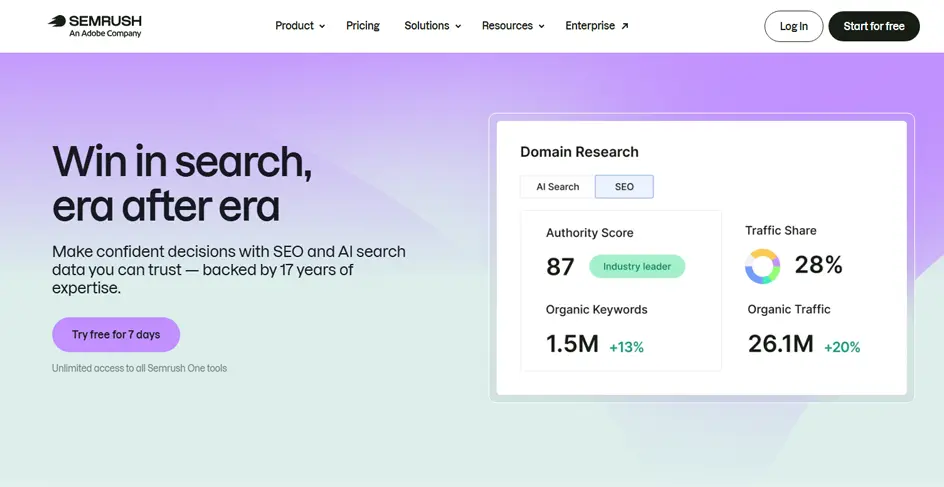
6. Semrush One

semrush

Semrush One combines the classic SEO toolkit with AI visibility tracking, which shows whether your brand gets mentioned inside AI-generated answers. The free account is capped tightly but enough to test a keyword idea.

Key Features

  • Keyword research with volume, difficulty, and intent.
  • AI visibility tracking across assistants and AI Overviews.
  • Site audits and daily position tracking.
  • Competitor traffic and keyword gap analysis.
Benefits
  • One dashboard covers classic rankings and AI answer visibility.
  • The free account can double-check a keyword list before you spend.
Drawbacks
  • Free accounts get only ten keyword results per report and ten reports daily.
  • Specialist toolkits are billed separately, and the price adds up quickly.

Pricing: Free account; from $199/mo

Rating: 4.4/5 (G2)
7. AnswerThePublic

answerthepublic

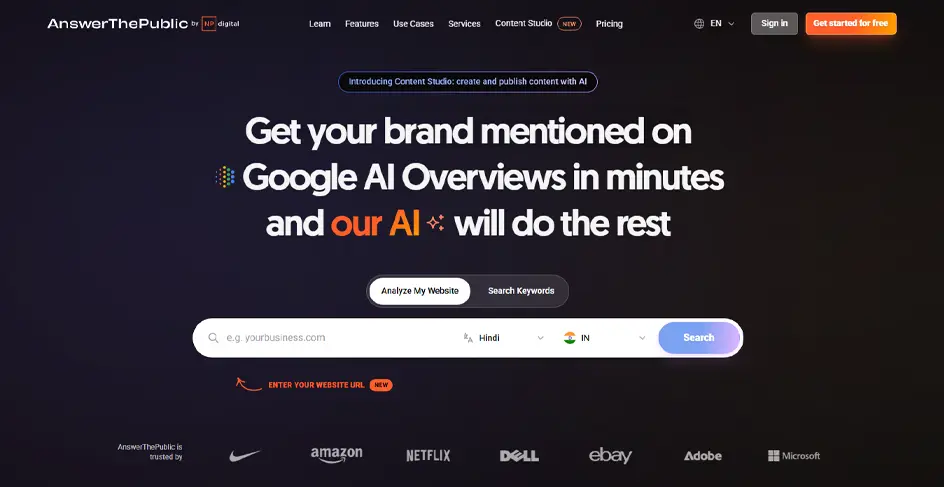
AnswerThePublic turns autocomplete data into visual maps of the questions people actually type. It finds angles and phrasing for FAQs and headings rather than telling you how much traffic those questions carry.

Key Features

  • Visual question wheels built from real autocomplete searches.
  • Coverage of Google, YouTube, TikTok, Instagram, and Amazon.
  • People Also Ask and AI Models reports for topic ideas.
  • Export insights as images or CSVs on paid plans.
Benefits
  • Improve snippet targeting with search phrases that volume-focused tools miss.
  • Visual outputs are ready to drop into client decks without redesign.
Drawbacks
  • Free accounts are limited to three searches a day.
  • No search volume or difficulty data at the free tier.

Pricing: Free; paid from $11/mo

Rating: 4.5/5 (G2)

8. Perplexity AI

perplexity - ai marketing tools

Perplexity answers research questions and attaches a source link to each statement. That makes it useful for checking a statistic or a competitor claim before it goes into a published draft.

Key Features

  • Cited answers with a source link per prompt.
  • Pro Search for multi-step research questions.
  • Spaces for grouping files and threads by client.
  • Comet browser access at no cost.
Benefits
  • Claims trace back to a source, cutting verification time on data-heavy posts.
  • Answers market questions faster than manual searching.
Drawbacks
  • Free accounts get roughly five Pro searches a day.
  • Weak at long-form drafting and creative copy.

Pricing: Free; Pro from $20/mo

Rating: 4.4/5 (G2)

AI Marketing Tools for Social Media, Design, and Video

This group addresses the volume problem with free AI tools for digital marketing work: daily posts, platform-specific sizes, and original-sounding captions.

9. Canva Magic Studio

canva-2 - ai marketing tools

Magic Studio is the AI layer inside Canva. Background removal, resizing, copywriting, and video generation are all integrated into a single editor alongside your templates and brand assets, eliminating the need to use multiple tools.

Key Features

  • Magic Write for captions inside a design.
  • Background Remover and Magic Eraser for cleanup.
  • Magic Resize for reformatting across channel placements.
  • Text-to-image and text-to-video generation.
Benefits
  • Non-designers produce on-brand assets without a second tool.
  • The template library keeps AI output visually consistent.
Drawbacks
  • Free accounts get 50 AI credits a month, shared across every AI feature.
  • Magic Eraser and Magic Expand are locked to Pro.

Pricing: Free; Pro from $18/mo

Rating: 4.7/5 (G2)
10. Buffer

buffer

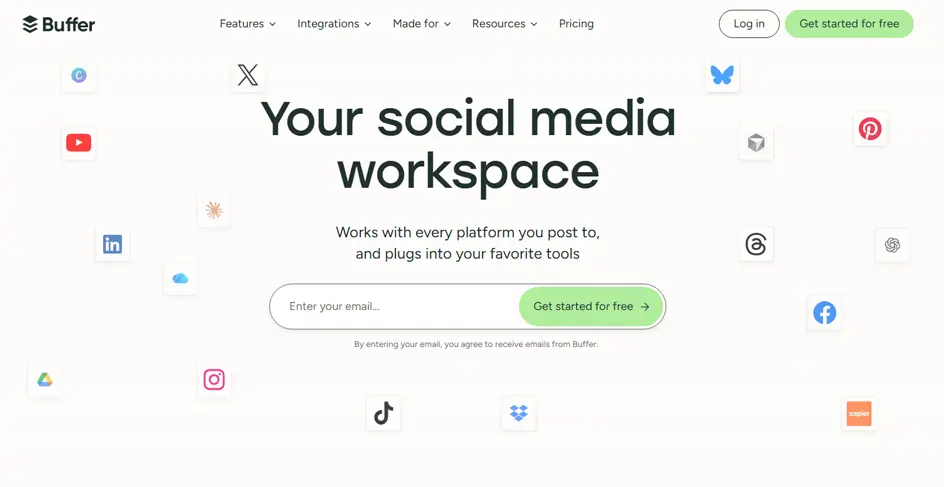
Buffer is a social media scheduler with an AI Assistant that drafts, rewrites, and adapts posts for different platforms. Its free plan remains usable after the trial, with limits on the number of channels and scheduled posts.

Key Features

  • AI Assistant for caption drafts and rewrites.
  • Scheduling across 11+ platforms including TikTok and Threads.
  • Content ideas library for holding drafts.
  • Engagement analytics with 30 days of history.
Benefits
  • The AI Assistant has no usage cap, even on the free plan.
  • Per-channel pricing keeps small accounts cheaper than flat-rate rivals.
Drawbacks
  • Free accounts allow only three channels and ten queued posts per channel.
  • The AI rewrites text but generates no images or video.

Pricing: Free; from $5/channel/mo

Rating: 4.3/5 (G2)

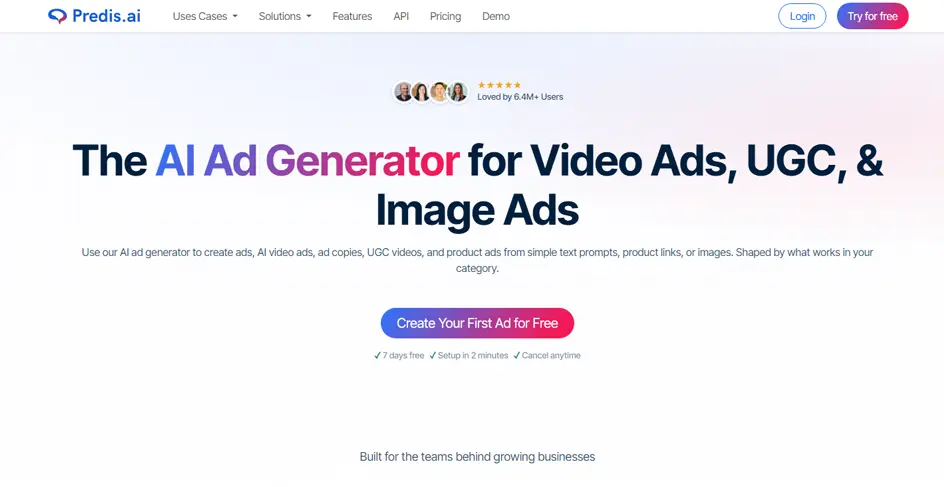
11. Predis.ai

predis

Predis.ai creates ready-to-publish social posts from a product link or short prompt, including carousels and short videos. It generates the caption and visual creative together.

Key Features

  • Text-to-post generation for images, carousels, and video.
  • Competitor post analysis for benchmarking creative.
  • Product photoshoot generation for eCommerce listings.
  • Direct publishing to connected accounts on paid tiers.
Benefits
  • Delivers complete assets, removing the design step at high volume.
  • Best for stores needing daily posts without a designer on payroll.
Drawbacks
  • Free output carries a watermark and a small monthly allowance.
  • Automatic posting is reserved for higher tiers.

Pricing: Free; Core from $19/mo

Rating: 4.7/5 (G2)
12. Sprout Social

sproutsocial

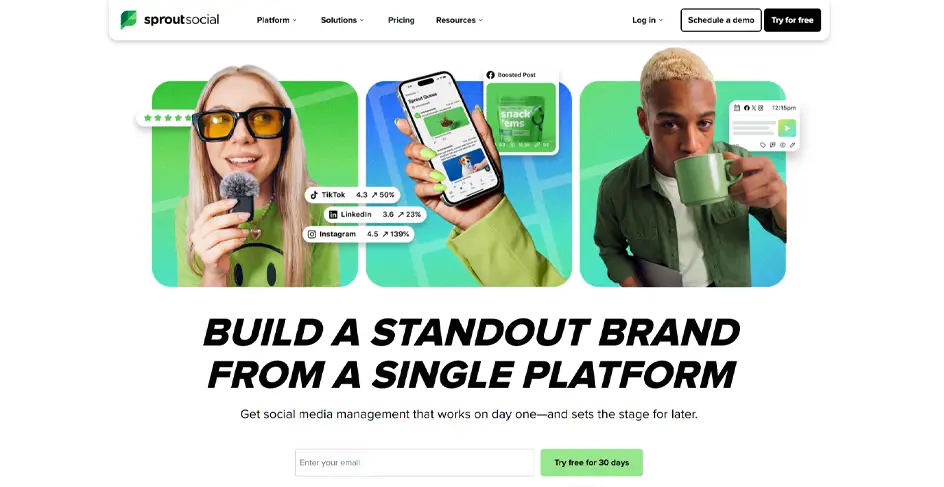
Sprout Social is the enterprise option here, built for teams handling high volumes of inbound messages, approval chains, and client reporting across multiple accounts. There is no free plan, only a trial.

Key Features

  • AI message tagging and sentiment in the Smart Inbox.
  • Optimal Send Times from your own engagement data.
  • Review management across Google, Yelp, and Facebook.
  • Presentation-ready reports for clients and executives.
Benefits
  • Handles high message volume better than any other tool here.
  • Reporting holds up in front of executives without reformatting.
Drawbacks
  • The 30-day trial is the only free access, and plans bill annually.
  • Social listening is a paid add-on at every tier.

Pricing: No free plan; from $79/seat/mo

Rating: 4.4/5 (G2)

AI Marketing Tools for Email Marketing and Automation

In this category, choosing the right free AI tools for marketing starts with understanding their usage limits.
13. Brevo

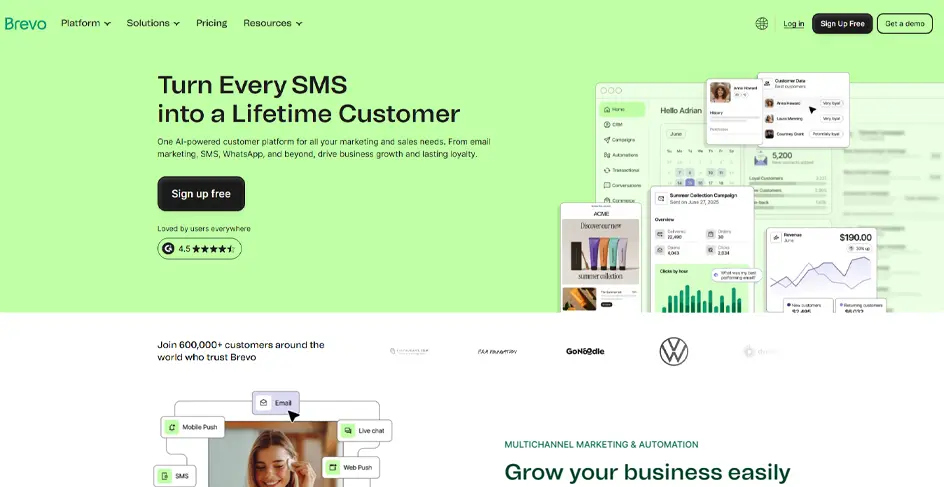
brevo

Brevo charges based on emails sent, not contacts stored. That suits teams with large lists and a modest send schedule, since the bill does not increase as the list grows.

Key Features

  • AI subject lines and send-time optimization.
  • Automation workflows on the free plan.
  • Shared inbox with SMS and WhatsApp campaigns.
  • Built-in CRM with contact and deal tracking.
Benefits
  • Free accounts store 100,000 contacts.
  • Built-in transactional email and SMTP remove the need for a second vendor.
Drawbacks
  • Free and Starter email accounts display Brevo’s logo without a paid add-on.
  • The 300-email daily limit makes it difficult to send large announcements at once.

Pricing: Free; Starter from $9/mo

Rating: 4.5/5 (G2)
14. MailerLite

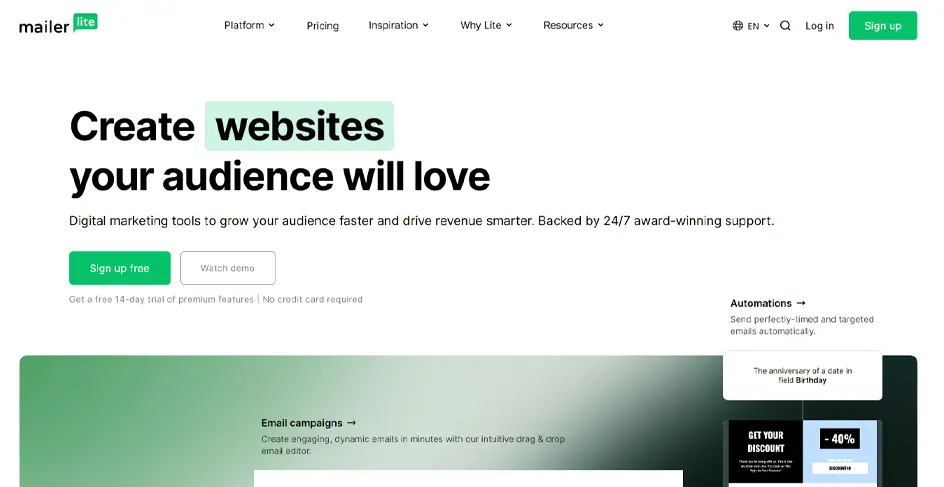
mailerlite

MailerLite is the easiest builder in this group. Its plans include landing pages, signup forms, and simple websites along with email campaigns, making it a good fit for solo marketers and small teams.

Key Features

  • Drag-and-drop editor with custom templates.
  • AI writing assistant for subject lines and body copy.
  • Visual automation builder with multi-step workflows.
  • Landing pages, signup forms, and popups.
Benefits
  • A first newsletter can go out within minutes.
  • Free accounts now include custom templates and two seats.
Drawbacks
  • The free tier was reduced in June 2026 to 250 subscribers and 2,500 monthly emails.
  • Paid prices rose 10–30% in a single update.

Pricing: Free; Pro from $12/mo

Rating: 4.6/5 (G2)
15. Omnisend

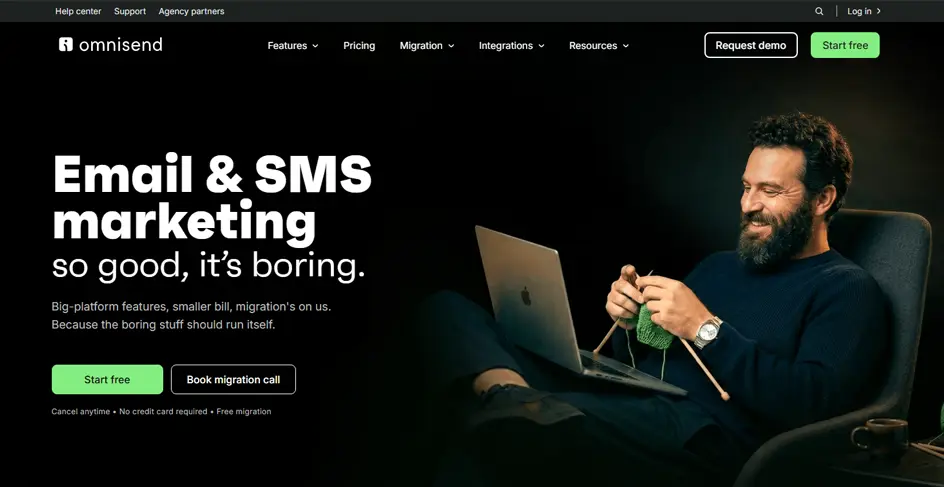
omnisend

Omnisend is built for online stores, with revenue-focused automations like cart abandonment and post-purchase flows available on the free plan instead of locking them behind a paywall.

Key Features

  • Prebuilt cart abandonment and post-purchase automation.
  • Product picker pulling live catalog items into emails.
  • Segmentation on purchase and browsing behavior.
  • Popups, forms, and unlimited landing pages.
Benefits
  • 24/7 live chat and email support comes with every plan, including free.
  • Shopify and WooCommerce syncing works without configuration.
Drawbacks
  • Free sending stops at 500 emails a month to 250 contacts.
  • Pricing scales with stored contacts, so the bill rises when the mailing list grows.

Pricing: Free; Standard from $16/mo

Rating: 4.6/5 (G2)
16. Mailchimp

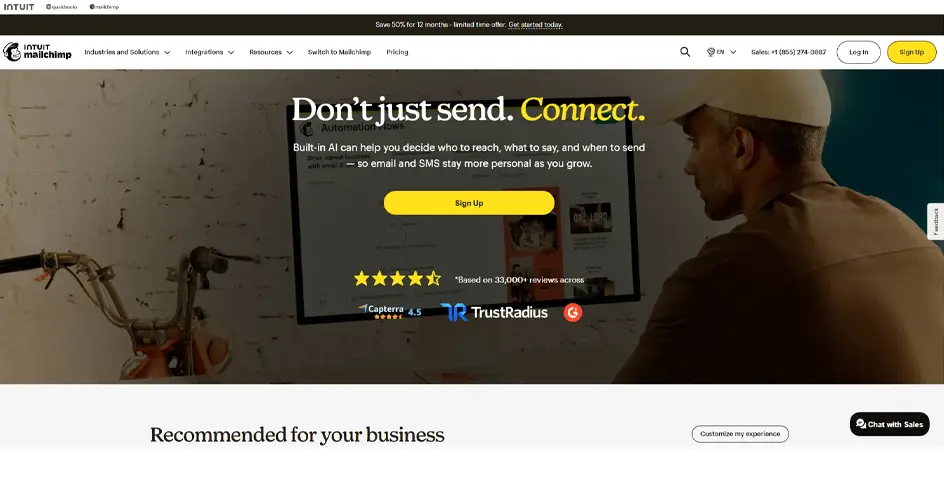
mailchimp

Mailchimp remains one of the most widely integrated email platforms, connecting with almost any existing stack. Its free plan has been repeatedly reduced and now serves mainly as a limited demo account.

Key Features

  • AI subject line suggestions and send-time optimization on the free plan.
  • Content Optimizer scoring copy, imagery, and layout (Standard plan and above).
  • Drag-and-drop editor with a large template library.
  • 300+ native eCommerce, CRM, and ads integrations.
Benefits
  • Integration coverage beats every competitor in this list.
  • Benchmarking shows how your open and click rates compare with your industry.
Drawbacks
  • The free plan dropped to 250 contacts and 500 monthly emails.
  • Automation was removed from the free tier entirely.

Pricing: Free; Essentials from $13/mo

Rating: 4.4/5 (G2)

AI Marketing Tools for Chatbots and Customer Engagement

These tools either capture customer details or resolve a question before anyone even reads it. Let’s explore the free AI tools for marketing that improve response time.

17. ManyChat

manychat - ai marketing tools

ManyChat automates Instagram and Messenger conversations. Its comment-to-DM flows turn a keyword in your post comments into a direct message, turning your comment section into a contact list.

Key Features

  • Comment-to-DM automation triggered by keywords.
  • Drag-and-drop flow builder that needs no code.
  • Broadcast messaging to opted-in contacts.
  • WhatsApp, SMS, and email channels on paid tiers.
Benefits
  • Captures leads inside the app, with no landing page in between.
  • The flow builder suits marketers with no automation background.
Drawbacks
  • The March 2026 repricing cut the free plan from 1,000 contacts to 25.
  • Billing counts inactive contacts unless you remove them manually.

Pricing: Free; Essential from $14/mo

Rating: 4.5/5 (G2)

18. Tidio

tidio - ai marketing tools

Tidio pairs live chat with Lyro, an AI agent that answers customer questions from your existing help pages and product content. Anything it cannot handle passes to a human in the same inbox.

Key Features

  • Lyro AI agent trained by scraping your site content.
  • Shared inbox for chat, email, Messenger, and Instagram.
  • Visual flow builder for rule-based chatbots.
  • Shopify order lookup inside the chat window.
Benefits
  • Setup runs off a URL scrape, so answers go live within hours.
  • The free plan includes 10 seats, commonly a paid feature in other tools.
Drawbacks
  • Lyro is capped at 50 one-time conversations before it becomes a paid add-on.
  • Pricing can be hard to predict, with separate limits for chats, Lyro, and flow triggers.

Pricing: Free; Starter from $24.17/mo

Rating: 4.6/5 (G2)
19. Collect.chat

collect.chat

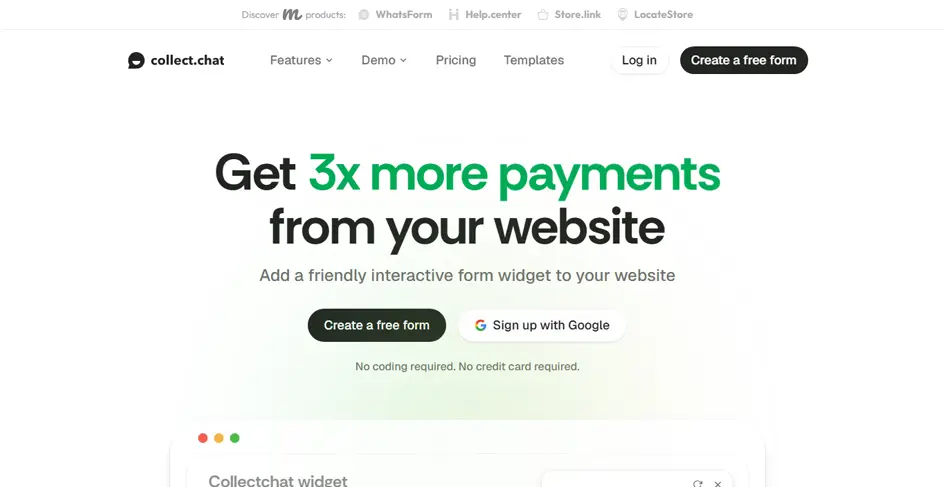
Instead of support bots, Collect.chat builds conversational forms. It replaces a static contact form with a chat window that asks one question at a time, which tends to hold attention longer and decrease bounce rate.

Key Features

  • Drag-and-drop builder assembled from sentence templates.
  • Conditional logic that branches on answers.
  • Appointment booking with calendar integration.
  • Response dashboards with CSV export.
Benefits
  • Conversational formats collect more complete answers than long forms.
  • Installation needs one script and no development time.
Drawbacks
  • The free plan caps monthly responses and shortens data retention.
  • Replies are scripted rather than AI-generated, so odd questions go unanswered.

Pricing: Free; Paid from $19/mo

Rating: 4.6/5 (G2)
20. Zendesk

zendesk

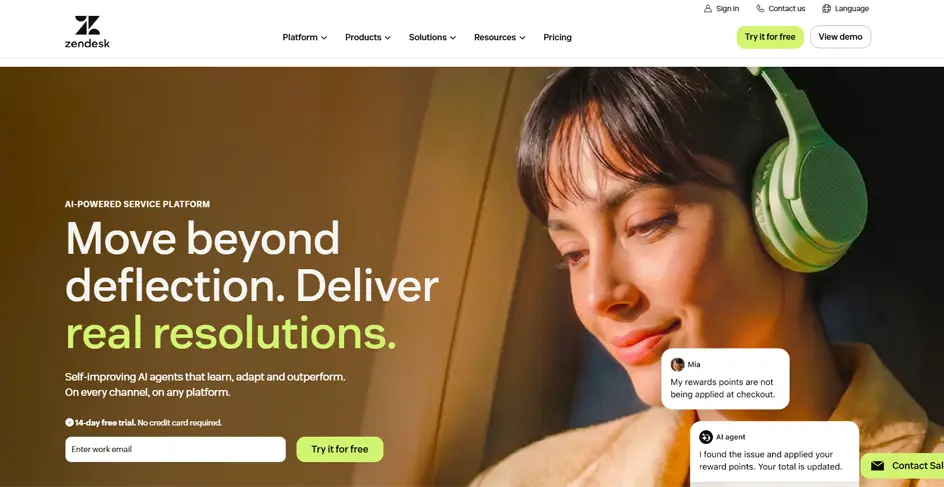
Zendesk is the enterprise support platform here. Its AI agents handle routine requests without a human opening the ticket, and its triage tools route whatever remains to the right person.

Key Features

  • AI agents resolving chat, email, and messaging requests.
  • Intelligent triage for routing and prioritizing tickets.
  • Copilot suggestions and drafted replies for agents.
  • A help center that trains the AI.
Benefits
  • Absorbs omnichannel volume that lighter chat tools fail to handle.
  • The marketplace covers most CRM and eCommerce integrations.
Drawbacks
  • There is no free plan, only a 14-day trial.
  • AI agents bill per automated resolution on top of seat costs.

Pricing: No free plan; from $19/agent/mo

Rating: 4.3/5 (G2)

20 options are more than any marketing team needs, so the last step is to narrow the list.

Choosing the Most Suitable Free AI Tool for Marketing

Three quick checks prevent an AI tool from becoming another abandoned login or wasted budget.

Start With Your Biggest Bottleneck

Identify the task that is disrupting your marketing workflow. For example:

  • Ready designs are unpublished because nobody writes captions? Start with a scheduler that drafts them.
  • Follow-ups going out late because the inbox is full? Start with a chat agent.
  • Pages published but not ranking? Start with a search engine optimizer, not a writing tool.

Understand the Limitations of Free Tier

Vendors recover costs through usage caps, locked features, or forced branding, and these limits can change with little notice. 

Mailchimp now allows 250 contacts, MailerLite dropped to 250 subscribers in June 2026, and ManyChat reduced its free contacts from 1,000 to 25. Check contact, message, and feature limits before committing to a platform.

Test the Selected Tool on Real-World Projects

Run one live campaign through the free tier instead of a sample task, then track two things:

  • How long did setup take?
  • How much of the AI output needed reworking?

A tool that saves an hour on generation but adds two hours of cleanup has cost you time. With that method in place, the shortlist gets much smaller than twenty.

Takeaway: Which Free AI Tool for Marketing Works for You?

Adopting all twenty would cost nothing and still be a mistake. Every tool adds setup and maintenance costs, even when it’s free. Three are enough for most small teams:

  • ChatGPT, for versatility. Briefs, rewrites, ad variants, audience targeting, and campaign analysis run through one free login, and standard text chats are now uncapped.
  • Brevo, for email. Its automation and 100,000-contact storage on the free plan are unparalleled advantages, while send-based billing means list growth alone won’t increase costs.
  • Canva Magic Studio, for creatives. Copy, design, resizing, and video all included in one editor, eliminating handoffs that slow down small teams.

Add a fourth only when a bottleneck demands it: Buffer if scheduling is the delay, AIOSEO if pages are unoptimized on WordPress, Tidio if chat questions go unanswered overnight. 

If you want help matching the best AI tools for marketing to your own stack and budget, get in touch with our team.

Frequently Asked Questions

What are the top 5 AI marketing tools?

ChatGPT for writing and analysis, Semrush One for search and AI visibility, Canva Magic Studio for creative, Brevo for email automation, and Tidio for AI-powered chat. Each has a working free tier, not a trial.

Which AI tool is best for marketers?

ChatGPT is the strongest all-rounder for briefs, rewrites, ad variants, audience analysis, and campaign reviews. For specialized work, tools like Semrush One provide deeper SEO and AI visibility data.

Which AI chatbot is totally free?

No AI chatbot is truly unlimited for free. Tidio offers 50 chats and 50 one-time Lyro conversations, while ManyChat’s free plan now supports just 25 active contacts.

What is the best free AI automation tool?

Brevo. Its free plan includes automation workflows, 300 daily emails, and storage for 100,000 contacts. Most other options set limits on contact list or lock automation behind a paywall.

What is the best free AI tool for creating content?

Rytr is a strong choice for short-form content with 10,000 free characters monthly. For longer drafts and reasoning-heavy work, such as messaging critique, ChatGPT is better to use before you hit a limit.

Which is the best AI for social media?

Buffer, if captions and scheduling are the gap, since its AI Assistant is uncapped even on the free plan. Predis.ai is stronger when you need finished carousels and videos, not just text.